Thermal Conductivity Test Methods for Rubber Foam Board
2025-12-26 14:27:25
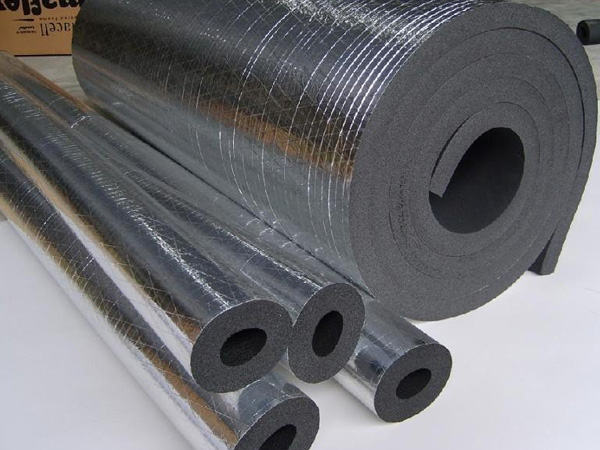
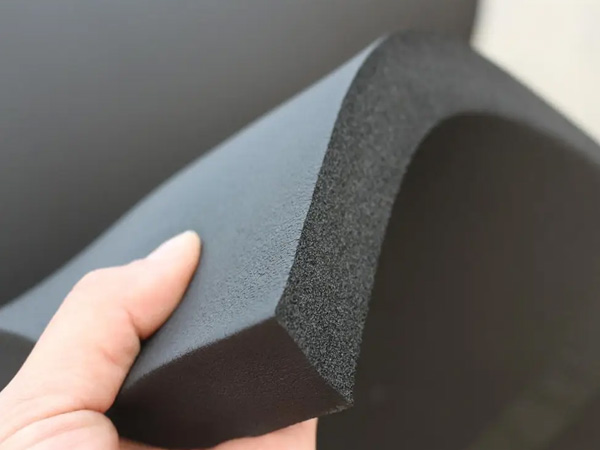
Rubber Foam Board is widely used in insulation systems for HVAC, refrigeration, construction, and industrial equipment due to its excellent thermal insulation, flexibility, and moisture resistance. One of the most critical performance indicators of rubber foam board is thermal conductivity, which directly determines its insulation efficiency and energy-saving capability.
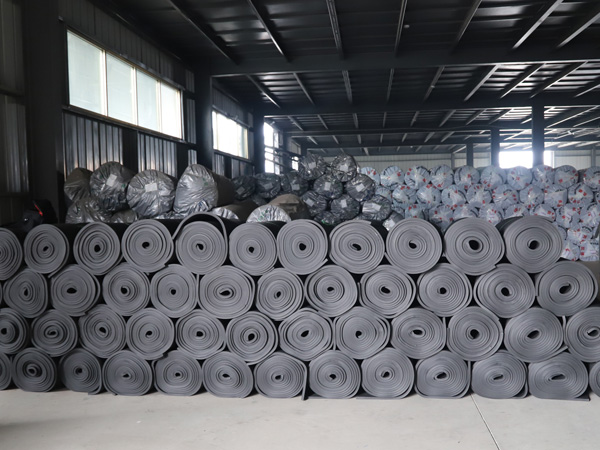
For manufacturers involved in large-scale production and bulk supply, accurate and standardized thermal conductivity testing is essential to ensure consistent quality and compliance with international requirements. This article introduces common thermal conductivity test methods for rubber foam board and explains how test results are evaluated in practical applications.
Why Thermal Conductivity Matters for Rubber Foam Board
Thermal conductivity indicates how efficiently heat passes through a material. A lower thermal conductivity value means better insulation performance.
In rubber foam board applications, thermal conductivity affects:
·Energy efficiency of insulation systems
·Condensation prevention performance
·Long-term stability under temperature variation
·Compliance with building and industrial standards
Professional rubber foam board manufacturers rely on precise testing methods to validate product performance during production and quality control.
Basic Principles of Thermal Conductivity Testing
Thermal conductivity tests measure heat flow through a material under controlled temperature conditions. The basic principle involves:
·Applying a temperature difference across the specimen
·Measuring steady-state or transient heat transfer
·Calculating thermal conductivity based on heat flux and thickness
Different test methods are used depending on material structure, thickness, and application requirements.
Common Thermal Conductivity Test Methods for Rubber Foam Board
1. Guarded Hot Plate Method
The guarded hot plate method is one of the most widely recognized steady-state testing techniques.
Key features include:
·Uniform heat flow through the rubber foam board sample
·High accuracy for low thermal conductivity materials
·Suitable for laboratory certification testing
This method is often used by rubber foam board manufacturers for reference testing and product development validation.
2. Heat Flow Meter Method
The heat flow meter method is commonly used for routine quality control in mass production.
Advantages include:
·Faster testing compared to guarded hot plate
·Good repeatability for production batches
·Suitable for flexible insulation materials
During large-scale production, this method helps manufacturers maintain consistent thermal performance across bulk supply orders.
3. Transient Plane Source Method
The transient plane source method measures thermal conductivity using a short heat pulse.
Key characteristics:
·Rapid testing time
·Suitable for quality checks and R&D
·Effective for porous and elastomeric materials
This method is often used to monitor process stability during continuous rubber foam board production.
4. Laser Flash Method (Limited Application)
Although less common for rubber foam board due to material softness, the laser flash method may be used for comparative analysis of thermal diffusivity.
It is typically applied in research environments rather than routine production testing.
Sample Preparation and Testing Conditions
Accurate thermal conductivity results depend heavily on proper sample preparation.
Key considerations include:
·Uniform thickness and surface flatness
·Controlled temperature and humidity
·Avoiding compression during testing
·Conditioning samples before measurement
Experienced manufacturers establish standardized preparation procedures to ensure reliable test data throughout production cycles.
Influence of Temperature on Test Results
Thermal conductivity of rubber foam board varies with temperature. Most standards require testing at specific reference temperatures, such as:
·0°C
·10°C
·23°C
·40°C
Manufacturers often publish thermal conductivity values at multiple temperatures to reflect real application conditions in HVAC and industrial systems.
Quality Control in Bulk Production
In bulk production environments, thermal conductivity testing is part of a broader quality management system.
Typical quality control processes include:
·Incoming raw material inspection
·In-process thermal performance monitoring
·Batch sampling and statistical analysis
·Long-term performance evaluation
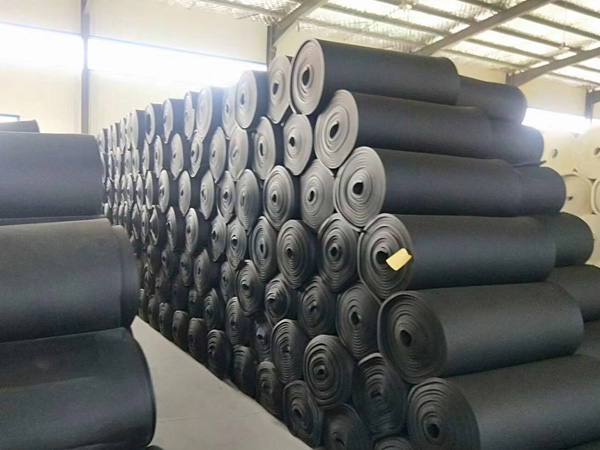
These measures ensure that rubber foam board supplied in large quantities meets consistent performance expectations.
Standards Commonly Referenced in Testing
Although specific standards vary by market, thermal conductivity testing of rubber foam board generally follows internationally recognized methodologies.
Manufacturers align their production testing procedures with these standards to support global supply requirements and technical documentation needs.
Interpreting Test Results for Practical Applications
Thermal conductivity values should be evaluated alongside other performance factors, such as:
·Water vapor resistance
·Fire behavior
·Mechanical strength
·Aging resistance
A comprehensive understanding helps engineers and buyers select rubber foam board that meets both thermal and durability requirements.
Manufacturer Perspective: From Testing to Application
From a manufacturer’s standpoint, thermal conductivity testing is not only about compliance but also about continuous improvement. Data collected during production helps optimize:
·Foam structure uniformity
·Cell size distribution
·Material formulation stability
This process-driven approach ensures reliable bulk supply and long-term customer confidence.
Conclusion: Reliable Testing Ensures High-Performance Rubber Foam Board
Accurate thermal conductivity testing is fundamental to evaluating the insulation performance of rubber foam board. By using standardized test methods and maintaining strict quality control throughout production, manufacturers can deliver products with stable and reliable thermal properties.
For projects requiring consistent insulation performance and large-volume supply, choosing Rubber Foam Board from a professional manufacturer with proven production capability and bulk supply experience ensures dependable results in real-world applications.
References
GB/T 7714:Bergman T L. Fundamentals of heat and mass transfer[M]. John Wiley & Sons, 2011.
MLA:Bergman, Theodore L. Fundamentals of heat and mass transfer. John Wiley & Sons, 2011.
APA:Bergman, T. L. (2011). Fundamentals of heat and mass transfer. John Wiley & Sons.
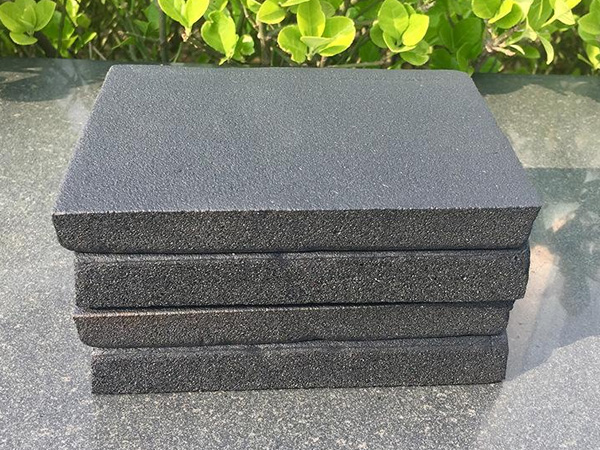
OurFlame Retardant Rubber Foamis a premium closed-cell elastomeric insulation material engi...
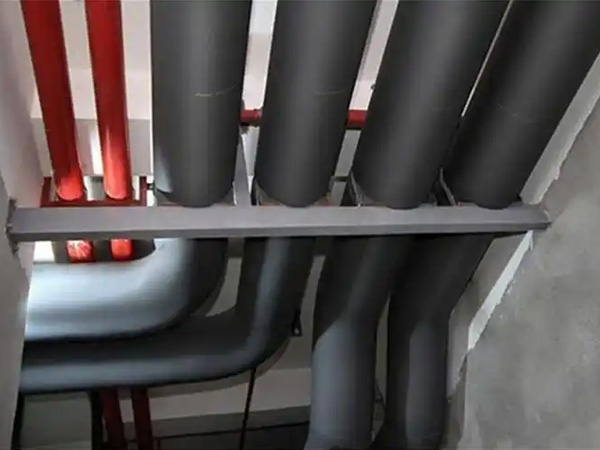
OurRubber Pipe Insulationis a high-performance solution designed specifically for HVAC pipi...
Rubber Foam Insulation Sheet – Product Introduction Premium Flexible Insulation for Therm...
Specially engineered for refrigeration applications, ourElastomeric Rubber Insulationprovid...