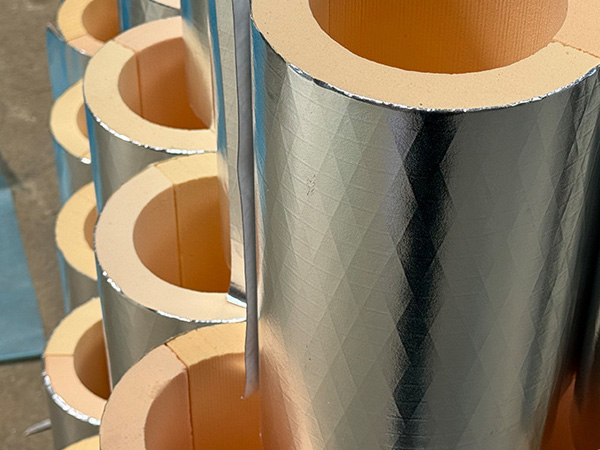
Phenolic foam thermal insulation pipe shell for pipeline insulation
Phenolic foam thermal insulation pipe shell is a high-performance solution designed for efficient thermal management in industrial, commercial, and HVAC piping systems. Manufactured from rigid phenolic foam, it provides superior insulation, fire resistance, and durability, making it ideal for both hot and cold pipeline applications.
Key Features & Benefits
1. Outstanding Thermal Performance
Ultra-low thermal conductivity (0.020–0.025 W/m·K) – Minimizes heat loss/gain for energy-efficient operation.
Stable temperature maintenance – Ensures consistent thermal protection in extreme conditions.
2. Fire-Resistant & Safe
Class A fire rating – Self-extinguishing with low smoke emission.
Non-toxic combustion – Safe for indoor and confined spaces.
3. Moisture & Corrosion Resistance
Closed-cell structure – Prevents water absorption (<1%) and eliminates corrosion under insulation (CUI).
Chemical resistance – Withstands exposure to oils, mild acids, and alkalis.
4. Lightweight & Durable
High strength-to-weight ratio – Easy to handle yet durable under mechanical stress.
Long service life – Resists aging, mold, and degradation.
5. Easy Installation & Maintenance
Pre-fabricated shells – Custom-fit for pipes, valves, and fittings.
Split design – Simplifies installation and allows for maintenance access.
Applications
✔ Industrial pipelines – Oil & gas, chemical plants, power stations.
✔ HVAC systems – Chilled water, steam, and condensate lines.
✔ Refrigeration systems – Cold storage and cryogenic pipelines.
✔ District heating networks – Energy-efficient hot water distribution.
Technical Advantages
Operating range: -40°C to +120°C
Compressive strength: ≥150 kPa
Custom thickness: 20–100mm
Standard diameters: 15–600mm
Why Choose Phenolic Foam Pipe Shells?
Energy savings – Reduces heat loss by up to 30% compared to traditional insulation.
Fire safety – Meets stringent fire protection standards.
Low maintenance – Long-lasting performance with minimal upkeep.
Space-efficient – High R-value allows for thinner insulation layers.
Installation Guidelines
Measure pipes – Ensure accurate dimensions for a perfect fit.
Select thickness – Choose based on thermal requirements.
Secure shells – Use high-temperature adhesive or mechanical fasteners.
Seal joints – Apply foil tape or mastic for airtight insulation.
Conclusion
Phenolic foam thermal insulation pipe shells provide optimal thermal protection, fire safety, and durability for critical pipeline systems. Their lightweight design and superior performance make them an excellent choice for energy-efficient and long-lasting insulation solutions.
Contact us for custom specifications or bulk orders!
Note: Performance may vary based on installation quality and operating conditions. Always follow manufacturer guidelines.
Exterior Wall Insulation Materials Comparison: Cotton vs Foam vs Board
Discover how cotton, foam, and board materials differ in performance for exterior wall insulation. Learn which insulation type delivers the best results for efficiency, durability, and installation—ideal for large projects and manufacturers with bulk prod
2025-12-14
Why Choose Thermal Insulation Cotton from China Manufacturers
Discover why Thermal insulation cotton from China manufacturers is becoming a global choice for construction, HVAC, industrial protection, and energy-saving projects. Learn about quality standards, production capabilities, cost advantages, performance ben
2025-12-11
The Future of Insulation: Innovations in Phenolic Foam Technology
Discover how next-generation Phenolic Insulation Board is reshaping the future of thermal protection. Learn about new materials, fire-safety breakthroughs, sustainability improvements, and how advanced Manufacturer / Production capabilities support high-p
2025-12-08
How to Install Sound Insulation Cotton: A Complete Step-by-Step Tutorial
Discover how to install sound insulation cotton correctly for homes, vehicles, and industrial equipment. This fully detailed guide explains preparation, tools, installation techniques, safety tips, and best practices—ideal for DIY users and buyers sourcin
2025-12-05